

Piece-rate compensation allows employers to pay workers based on the number of units they produce rather than an hourly wage. In California, this model is heavily regulated to ensure workers receive minimum wage for all hours worked, including non-productive time. According to recent labor compliance reports, over 40% of manufacturing and agricultural employers in the state utilize some form of piece-rate system. Navigating these rules requires specialized software that can handle complex calculations automatically. (Contact Us OnePoint HCM)
Understanding Piece-Rate Pay in California
Piece-rate pay is a compensation method where employees are paid a fixed rate for each unit produced or task completed. This model is common in industries like manufacturing, agriculture, and logistics. However, California law mandates that piece-rate workers must also be paid for non-productive time, such as rest breaks, meal periods, and training. This creates a complex payroll calculation that standard spreadsheets often fail to handle accurately. (Meet the ONEHCM Team)
The concept of piece-rate pay is a compensation model where workers are paid based on output rather than time. This definition is critical because it distinguishes piece-rate from hourly wages. Employers must ensure that the piece-rate earnings, when divided by total hours worked, meet or exceed the minimum wage for every hour. This includes both productive and non-productive time. (ONEHCM Human Connection Management)
Critical Compliance Rules for Employers
California’s piece-rate regulations are among the strictest in the United States. Employers must track time meticulously to separate productive hours from non-productive hours. Failure to do so can result in significant penalties and back pay claims. The non-productive time is any time spent on activities that do not directly contribute to the production of units. This includes waiting for work, attending meetings, or taking mandated breaks.
One of the most challenging aspects is calculating the regular rate of pay is the total compensation divided by total hours worked, including non-productive time. This rate must be used to calculate overtime premiums. If an employer fails to include non-productive time in this calculation, they risk violating wage and hour laws. Recent updates to California labor laws have increased scrutiny on these calculations, making automated software essential for compliance.
Essential Software Features for Piece-Rate
To manage piece-rate pay effectively, HR and payroll software must offer specific capabilities. Manual tracking is prone to errors and can lead to costly compliance issues. The right software should automate the calculation of regular rates, track time accurately, and generate compliant pay stubs. Here are the key features to look for:
- Time Tracking Integration: The software must integrate time clocks with piece-rate data to separate productive and non-productive hours.
- Automated Regular Rate Calculation: It should automatically calculate the regular rate of pay for overtime purposes.
- Compliant Pay Stubs: Pay stubs must clearly itemize piece-rate earnings, non-productive pay, and overtime premiums.
- Real-Time Reporting: Employers need real-time data to monitor labor costs and ensure compliance.
How ONEHCM Handles Piece-Rate Pay
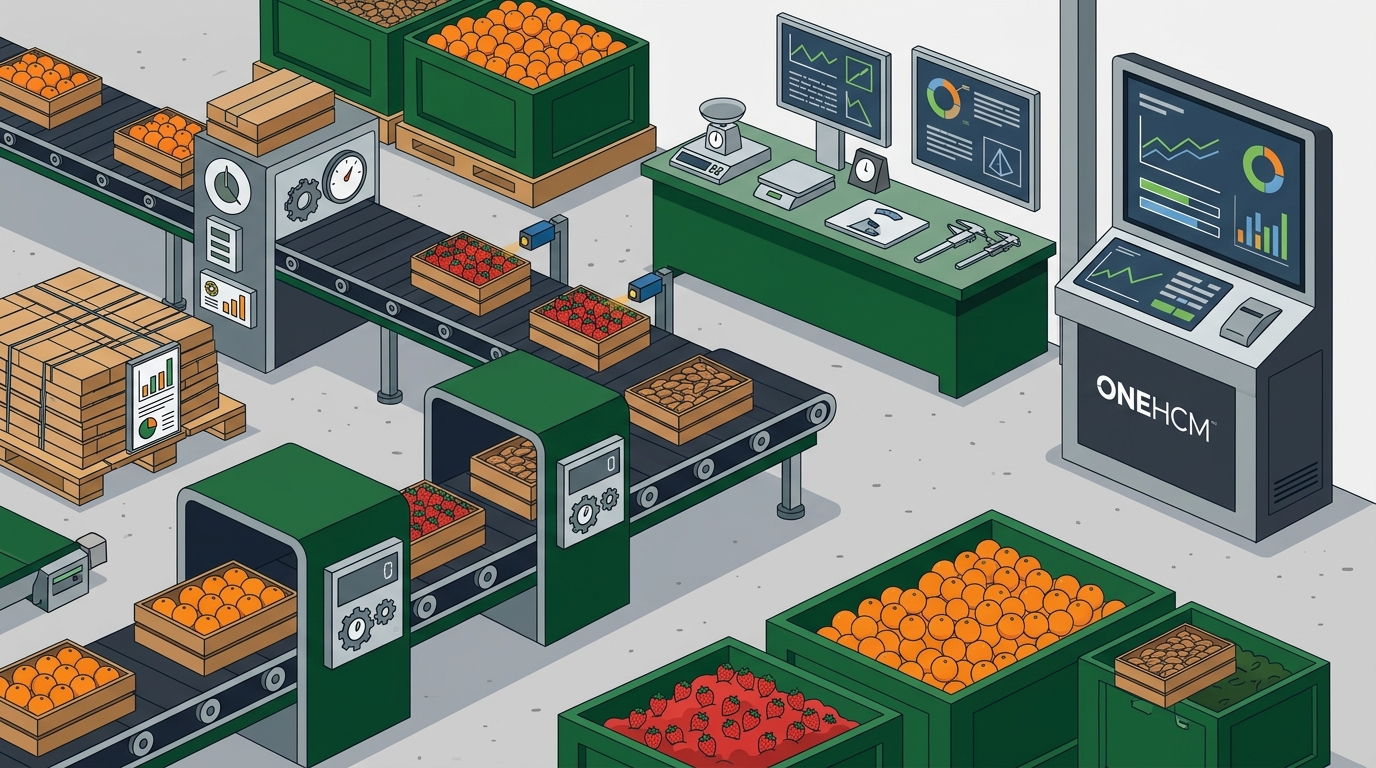
ONEHCM offers a comprehensive solution for managing piece-rate pay in California. Our platform unifies HR, payroll, and time & labor management into a single system. This integration ensures that piece-rate data is accurately reflected in payroll calculations, reducing the risk of errors and compliance issues.
Seamless Time and Labor Integration
ONEHCM’s time & labor module allows employers to track piece-rate work alongside standard hours. The system automatically calculates the regular rate of pay by dividing total piece-rate earnings by total hours worked, including non-productive time. This ensures that overtime premiums are calculated correctly, in compliance with California law.
Automated Compliance and Reporting
Our software automates the generation of compliant pay stubs, clearly itemizing all earnings and deductions. Employers can access real-time reports to monitor labor costs and ensure that piece-rate workers are receiving minimum wage for all hours worked. This transparency helps avoid costly audits and penalties.
Unified Employee Record
ONEHCM maintains a single employee record for each worker, consolidating HR, payroll, and time data. This unified view provides a complete picture of employee compensation and compliance status, making it easier for HR teams to manage piece-rate workers effectively.
Software Comparison for Piece-Rate
Choosing the right software is critical for managing piece-rate pay in California. Below is a comparison of key features across different types of HR and payroll solutions.
| Feature | ONEHCM | Generic Payroll Software | Spreadsheets |
|---|---|---|---|
| Piece-Rate Tracking | Yes, integrated | Limited | Manual |
| Regular Rate Calculation | Automated | Manual | Manual |
| Non-Productive Time Pay | Automated | Manual | Manual |
| Compliant Pay Stubs | Yes | Variable | No |
| Real-Time Reporting | Yes | Limited | No |
Key Takeaways
- Piece-rate pay in California requires tracking both productive and non-productive time.
- Employers must calculate a regular rate of pay that includes all hours worked.
- Overtime premiums must be calculated based on the regular rate, not just the piece-rate.
- ONEHCM offers integrated time and labor management to automate these calculations.
- Compliant pay stubs are essential to avoid penalties and audits.
- Real-time reporting helps employers monitor labor costs and ensure compliance.
- Manual tracking via spreadsheets is prone to errors and should be avoided.
Frequently Asked Questions
Do piece-rate workers in California get paid for breaks?
Yes, California law requires employers to pay piece-rate workers for non-productive time, including rest and meal breaks. This time must be compensated at the minimum wage rate.
How is overtime calculated for piece-rate workers?
Overtime is calculated based on the regular rate of pay, which includes total piece-rate earnings divided by total hours worked, including non-productive time. The overtime premium is then added to this rate.
Can I use spreadsheets to manage piece-rate pay?
While possible, using spreadsheets is highly risky due to the complexity of calculations and the potential for errors. Specialized software like ONEHCM is recommended for accuracy and compliance.
What happens if I fail to pay for non-productive time?
Employers may face significant penalties, back pay claims, and audits from the California Labor Commissioner’s Office. Automated software helps prevent these issues.
Does ONEHCM support piece-rate pay for all industries?
Yes, ONEHCM’s piece-rate module is designed for various industries, including manufacturing, agriculture, and logistics, ensuring compliance across different operational models.
How does ONEHCM ensure compliance with California labor laws?
ONEHCM automates the calculation of regular rates, tracks non-productive time, and generates compliant pay stubs, ensuring adherence to California’s strict piece-rate regulations.
Is there a demo available for ONEHCM’s piece-rate features?
Yes, you can request a demo to see how ONEHCM handles piece-rate pay and other HR and payroll needs. Visit our demo page to schedule a session.
Request Your Demo
Managing piece-rate pay in California requires precision and compliance. ONEHCM provides the tools you need to automate calculations, track time accurately, and ensure regulatory adherence. Don’t risk costly errors with manual processes. Request a demo today to see how ONEHCM can streamline your HR and payroll operations.