

California employers face a uniquely complex regulatory environment that demands precision in every HR process. Recent legislative updates have intensified the need for automated compliance tools that can keep pace with rapid legal changes. According to recent industry analyses, over 60% of HR leaders cite regulatory compliance as their top operational challenge, with California regulations ranking among the most difficult to manage due to their frequency and severity. This guide examines how modern Human Connection Management platforms address these specific state mandates. (Contact Us OnePoint HCM)
Understanding California Compliance Mandates
California labor laws are among the most stringent in the United States. Employers must navigate a web of regulations covering wage and hour laws, benefits administration, and employee privacy. The state frequently updates its statutes, requiring HR systems to adapt quickly to avoid costly penalties. For instance, the implementation of new emergency contact laws in 2026 requires employers to allow employees to designate specific contacts for arrest or detention scenarios. This level of detail demands a system that goes beyond basic record-keeping. (ONEHCM Human Connection Management)
Compliance is not just about avoiding fines. It is about maintaining trust and operational efficiency. When HR teams spend hours manually updating spreadsheets to meet new deadlines, productivity suffers. A unified platform reduces this burden by automating routine checks and ensuring that data is always current. The shift from Human Capital Management to Human Connection Management reflects this need for deeper, more responsive engagement with employee data. (ONEHCM Human Connection Management)
Key Features for California HR Software
To effectively manage California compliance, an HR platform must offer specific, robust features. Generalist tools often fall short when dealing with the nuances of state law. The best solutions provide specialized modules that address the unique requirements of California employers.
Payroll and Wage Hour Accuracy
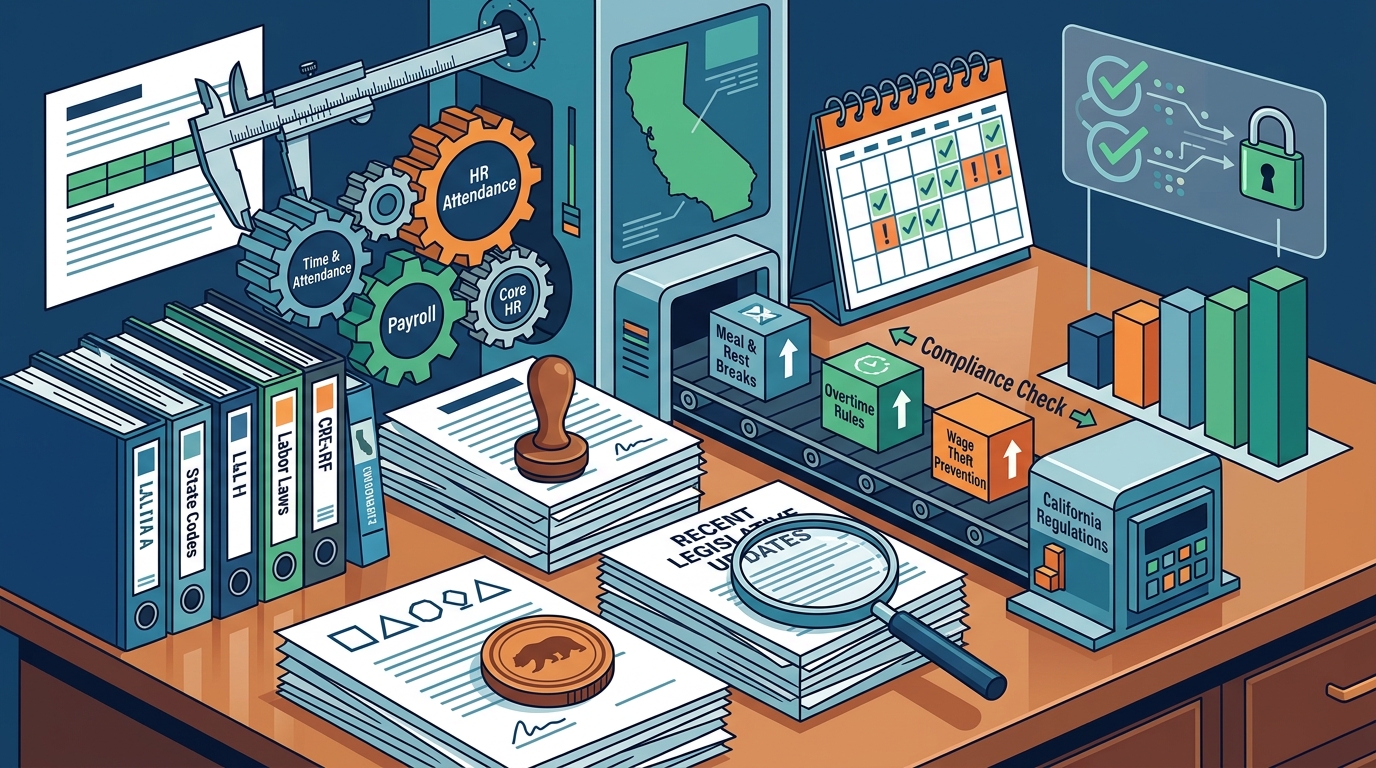
Wage and hour compliance is the most critical aspect of California HR management. The state has strict rules regarding overtime, meal breaks, and rest periods. Prevailing wage laws require contractors on government-funded projects to pay workers region-specific rates. Certified payroll reporting is the weekly documentation that proves compliance with these laws. For construction and manufacturing leaders, this distinction is vital to avoid audits and penalties.
Modern payroll systems must seamlessly share information to ensure accurate runs. This means that timekeeping data must flow directly into payroll without manual intervention. Any discrepancy can lead to significant back-pay liabilities. The best software offers real-time tracking and automated calculations that adhere to the latest California Labor Code updates. This automation minimizes the risk of human error, which is a common cause of compliance failures.
Leave Management and ACA Compliance
California offers some of the most generous leave policies in the country. Employers must manage Paid Family Leave (PFL), Paid Sick Leave, and the California Family Rights Act (CFRA). Additionally, the Affordable Care Act (ACA) reporting requirements add another layer of complexity. ACA Manager tools within an HR platform help automate the tracking of full-time equivalent employees and the reporting of health coverage offers.
Leave management software should reduce the risk of non-compliance penalties by managing leave using a single solution. This means that all leave types are tracked in one place, providing a holistic view of employee absence. It also ensures that accruals are calculated correctly according to state-specific rules. For example, sick leave accrual rates differ based on company size and employee tenure. A unified system handles these variations automatically, freeing up HR staff to focus on strategic initiatives.
Data Security and Privacy
Data security is paramount in California due to the California Consumer Privacy Act (CCPA) and its successor, the California Privacy Rights Act (CPRA). These laws give employees and customers greater control over their personal information. HR software must include robust security protocols to protect sensitive employee data from breaches and unauthorized access.
This includes features like role-based access control, encryption at rest and in transit, and detailed audit logs. The software should also facilitate data subject access requests, allowing employees to view, correct, or delete their personal information. By prioritizing data security, employers can maintain trust and avoid the severe penalties associated with privacy violations. The integration of these security features into the core HR platform ensures that compliance is built into the workflow, not added as an afterthought.
Comparison of Compliance Solutions
Choosing the right HR software for California compliance involves comparing key features and capabilities. The table below outlines the critical aspects to consider when evaluating potential platforms.
| Feature Category | Essential Requirement | Benefit of Automation |
|---|---|---|
| Payroll Processing | Real-time wage and hour calculations | Reduces back-pay liabilities and audit risks |
| Leave Management | Unified tracking for PFL, CFRA, and Sick Leave | Ensures accurate accruals and reduces administrative burden |
| ACA Compliance | Automated FTE tracking and reporting | Minimizes penalties for incorrect reporting |
| Data Security | CCPA/CPRA compliant data handling | Protects sensitive employee information and builds trust |
| Support Model | Dedicated compliance expertise | Provides timely updates on legislative changes |
When evaluating these categories, it is important to look for a platform that offers a dedicated partner approach. This means that the software provider is not just a vendor but a resource for navigating complex regulations. The best solutions offer personalized support to help organizations tailor the system to their specific needs. This partnership model is crucial for staying ahead of regulatory changes and ensuring long-term compliance.
Key Takeaways
- California compliance requires specialized software that addresses wage and hour, leave, and privacy mandates.
- Automated payroll processing reduces the risk of errors and associated financial penalties.
- Unified leave management simplifies the tracking of multiple state-specific leave types.
- ACA compliance tools are essential for accurate reporting of health coverage offers.
- Data security features must align with CCPA and CPRA requirements to protect employee privacy.
- Dedicated support and compliance expertise are critical for navigating legislative updates.
- A unified platform eliminates the need for disconnected systems, improving overall efficiency.
Frequently Asked Questions
What is the most critical compliance feature for California HR software?
The most critical feature is accurate payroll processing that adheres to California wage and hour laws. This includes automated calculations for overtime, meal breaks, and rest periods. Without this accuracy, employers face significant financial risks and legal penalties.
How does HR software help with ACA compliance?
HR software helps with ACA compliance by automating the tracking of full-time equivalent employees and generating the necessary reports. This ensures that employers meet their reporting obligations and avoid penalties for non-compliance.
What is Human Connection Management?
Human Connection Management is an approach to HR that emphasizes the human element of workforce management. It focuses on connecting with employees through communication, technology, and service, rather than just treating them as capital.
Does ONEHCM support California-specific leave laws?
Yes, ONEHCM supports California-specific leave laws through its unified leave management module. This allows employers to track and manage Paid Family Leave, CFRA, and sick leave in a single system.
How often are compliance updates applied to HR software?
Compliance updates are applied regularly to reflect changes in state and federal laws. Leading providers like ONEHCM prioritize timely updates to ensure that their clients remain compliant with the latest regulations.
What is the cost of implementing HR software for compliance?
The cost varies depending on the size of the organization and the specific features required. However, the return on investment often comes from reduced administrative time and avoided compliance penalties.
Can HR software integrate with existing payroll systems?
Many modern HR platforms offer integrations with existing payroll systems. This allows for seamless data sharing and ensures that all employee information is consistent across systems.
Next Steps for Compliance
Navigating California compliance does not have to be a burden. By choosing the right HR software, employers can streamline their processes and focus on what matters most: their people. ONEHCM offers a comprehensive solution that addresses the unique challenges of California regulations. From payroll to benefits, our platform provides the tools you need to stay compliant and engaged.
Take the first step toward smarter HR. Request a demo today to see how ONEHCM can transform your workforce management. Our dedicated team is ready to help you build a more connected and compliant workplace.