

Choosing a Multi-State Payroll Provider: California Compliance & Beyond
Operating a business across state lines introduces a labyrinth of regulatory requirements that can quickly overwhelm even the most seasoned HR leaders. According to the U.S. Department of Labor, payroll compliance is not merely a financial transaction but a legal obligation that varies drastically from one jurisdiction to the next. For companies expanding beyond their home state, the risk of non-compliance penalties, particularly in high-stakes environments like California, demands a payroll partner that offers more than just basic check printing. You need a system that acts as a proactive shield against regulatory drift, ensuring that every dollar earned and every hour worked is processed with absolute precision. (Contact Us OnePoint HCM)
California-Specific Compliance Challenges
California stands as the most complex jurisdiction for payroll administration in the United States. The state’s labor laws are frequently updated, and the penalties for non-compliance are severe. When selecting a payroll provider, your first filter must be their ability to handle California’s unique regulatory landscape without requiring manual intervention. (Meet the ONEHCM Team)
1. Accurate Overtime Calculation
California overtime rules are significantly more stringent than federal standards. According to the California Department of Industrial Relations, non-exempt employees are entitled to one day of rest in seven, and overtime is calculated differently for daily versus weekly thresholds. Your payroll system must automatically detect these thresholds. If an employee works more than eight hours in a single day, they are owed time-and-a-half. If they work more than twelve hours, they are owed double-time. A generic payroll provider often misses these nuances, leading to costly underpayments and subsequent litigation. (ONEHCM Human Connection Management)
2. Paid Sick Leave and Mandatory Benefits
California mandates paid sick leave for all employees, with accrual rates varying based on company size and local ordinances. As outlined by the California Department of Industrial Relations, employers must track accruals and provide detailed statements. Your payroll provider must integrate these accruals seamlessly into the timekeeping module, ensuring that leave balances are accurate in real-time. Failure to do so can result in significant penalties during an audit.
3. Wage Statement Compliance
California requires specific information on every wage statement, including the employer’s address, employee’s net hours worked, and the applicable hourly rate. According to the California Division of Labor Standards Enforcement, missing any of these details can invalidate the wage statement, exposing the employer to statutory penalties. A robust payroll system must generate these customized statements automatically for every pay period.
Navigating Multi-State Tax Nexus
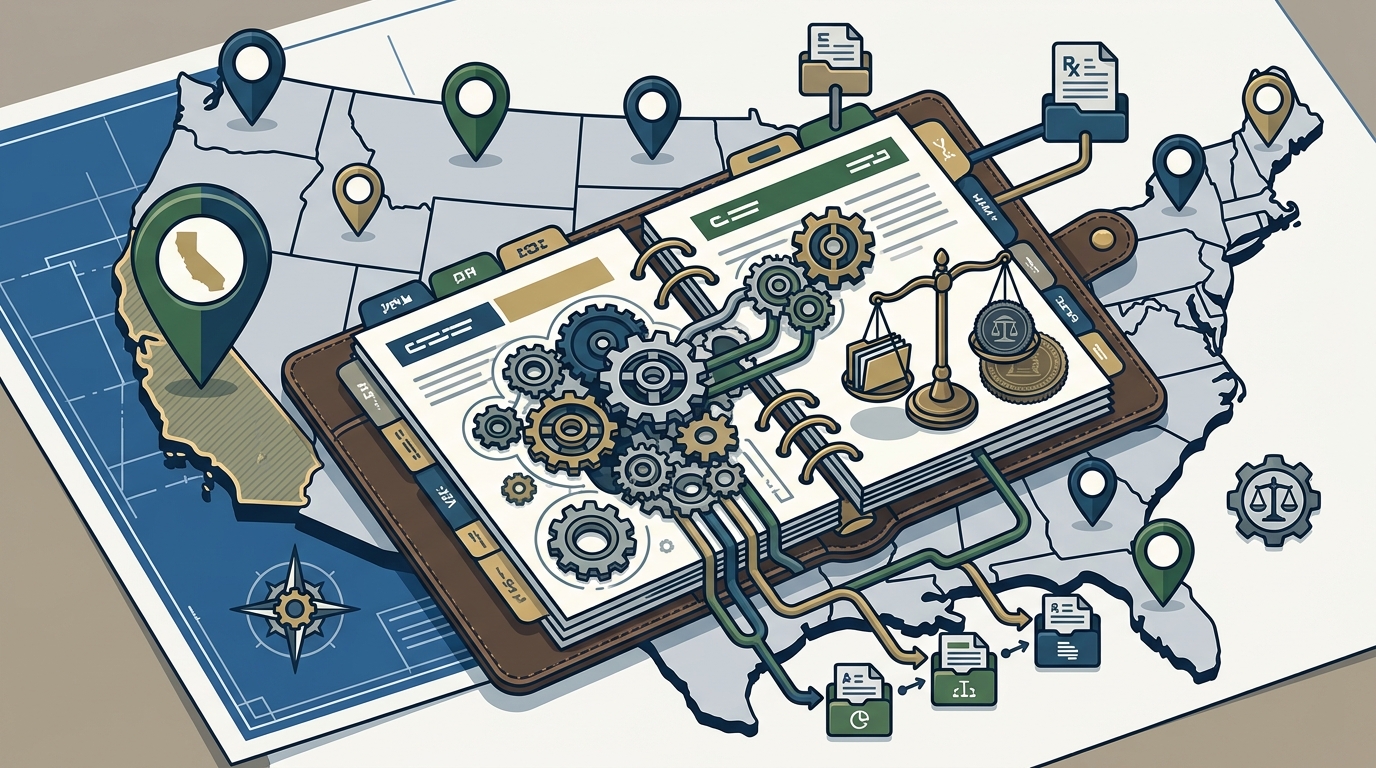
When your business operates in multiple states, you establish a "nexus" in each jurisdiction. This nexus triggers tax withholding, unemployment insurance, and workers' compensation obligations. Managing this manually is nearly impossible for growing businesses.
Dynamic Tax Rate Updates
Tax rates change annually, and sometimes mid-year. According to the Tax Foundation, over 1,000 local jurisdictions in the U.S. have their own income tax rates. Your payroll provider must have a system that automatically updates these rates across all relevant jurisdictions. If a provider relies on manual updates, you risk under-withholding or over-withholding, both of which create administrative burdens and employee dissatisfaction.
Unemployment Insurance (UI) and Workers' Compensation
UI rates are experience-rated, meaning they are based on your company’s history of layoffs. Data from the Bureau of Labor Statistics indicates that payroll processing errors are a leading cause of UI audit findings. A quality provider will help you manage UI filings in each state, ensuring that contributions are accurate and timely. This reduces the risk of audits and helps you maintain competitive insurance rates.
Essential Features for Multi-State Operations
Beyond compliance, the operational efficiency of your payroll system is critical. When managing employees across different time zones and labor laws, you need a platform that unifies these complexities.
Unified Employee Record
A fragmented system where HR, payroll, and timekeeping live in separate silos creates data integrity issues. According to SHRM, organizations that integrate their HR and payroll systems see a significant reduction in administrative errors. Look for a provider that offers a single source of truth for employee data. This ensures that when an employee’s status changes, it propagates instantly to payroll, benefits, and tax calculations.
Self-Service Portals
Empowering employees to manage their own data reduces the burden on your HR team. Data from Payscale shows that HR managers spend a substantial portion of their week on administrative tasks that could be automated. A robust self-service portal allows employees to update their W-4 forms, view pay stubs, and request time off from any device. This is particularly important for remote workers in different states, as it ensures that tax elections are updated correctly based on their current residence.
Advanced Reporting and Analytics
Multi-state operations generate complex data. You need reporting tools that can slice this data by state, department, or cost center. According to Gartner, leading organizations use payroll analytics to identify cost-saving opportunities and compliance risks. Your provider should offer customizable dashboards that highlight key metrics, such as overtime trends, tax liabilities, and labor costs by region.
Payroll Provider Comparison Matrix
To help you evaluate potential partners, here is a comparison of key features relevant to multi-state and California compliance.
| Feature | Basic Payroll Processors | Mid-Market HCM Solutions | Enterprise-Grade HCM (e.g., ONEHCM) |
|---|---|---|---|
| California Overtime Logic | Manual Configuration | Standard Rules | Automated & Dynamic |
| Multi-State Tax Filing | Limited Jurisdictions | Major States Only | Comprehensive Coverage |
| Unified Employee Record | No | Partial Integration | Single Source of Truth |
| Dedicated Support | Chat/Email Only | Tiered Support | Dedicated Partner |
| Compliance Updates | Reactive | Proactive | Real-Time Automation |
Key Takeaways
- California Compliance is Non-Negotiable: Ensure your provider handles daily overtime, double-time, and mandatory wage statement details automatically.
- Tax Nexus Management: Your provider must automatically update tax rates for all jurisdictions where you have employees.
- Unified Data is Critical: A single employee record prevents errors in payroll, benefits, and tax filings.
- Support Matters: Complex multi-state operations require dedicated human support, not just chatbots.
- Automation Reduces Risk: Manual processes are the primary source of payroll compliance errors.
- Scalability is Key: Choose a provider that can grow with you, adding states and features seamlessly.
- Real-Time Reporting: Access to real-time data helps you make informed financial decisions.
Frequently Asked Questions
What is the most difficult aspect of multi-state payroll?
The most difficult aspect is managing the varying tax rates, withholding rules, and reporting requirements for each state. According to the Tax Foundation, these rules change frequently, making manual management prone to error.
How does California overtime differ from federal overtime?
California requires overtime pay after eight hours in a workday, whereas federal law requires it after forty hours in a workweek. According to the California Department of Industrial Relations, this means employees can earn overtime even if they work less than forty hours in a week.
What is a payroll nexus?
A payroll nexus is the connection between your business and a state that triggers tax withholding and reporting obligations. According to the National Association of State Budget Officers, this can be established through physical presence or economic activity.
Why is a unified employee record important?
A unified record ensures that data entered once is used across all modules, reducing errors and improving efficiency. According to SHRM, integrated systems significantly reduce administrative burdens.
Can I manage multi-state payroll with spreadsheets?
While possible for very small teams, spreadsheets are error-prone and do not scale. Data from the Bureau of Labor Statistics indicates that manual processes are a leading cause of payroll errors.
What should I look for in a payroll provider’s support team?
Look for dedicated partners who understand multi-state compliance and can provide proactive guidance. Data from Payscale shows that HR managers value support that helps them navigate complex regulations.
How often do tax rates change?
Tax rates can change annually or even mid-year. According to the Tax Foundation, staying updated is crucial for compliance.
What is the cost of non-compliance in California?
Penalties can include fines, interest, and statutory damages. According to the California Division of Labor Standards Enforcement, penalties can accumulate quickly for ongoing violations.
Next Steps
Navigating the complexities of multi-state payroll and California compliance requires more than just software; it requires a partner who understands your unique business needs. ONEHCM offers a unified Human Connection Management platform that simplifies these challenges. Our dedicated support team and robust compliance tools ensure that your payroll operations are accurate, efficient, and compliant. Request a demo today to see how ONEHCM can transform your payroll processes and help your business thrive across state lines.