

Construction and manufacturing leaders face a complex web of wage regulations that vary significantly by jurisdiction. According to recent industry analyses, non-compliance with prevailing wage laws can result in penalties exceeding 20% of the total contract value, making accurate tracking essential for profitability. This guide details how to navigate these requirements using unified HCM systems. (Contact Us OnePoint HCM)
Understanding Prevailing Wage and Certified Payroll
Prevailing wage laws require contractors on government-funded projects to pay workers region-specific rates. These rates are typically determined by local government agencies and are based on the average wage paid to workers in the area for similar work. Certified payroll is the weekly reporting that proves compliance with these mandates. (ONEHCM Human Connection Management)
For construction and manufacturing sectors, understanding the distinction between standard payroll and certified payroll is critical. Standard payroll focuses on net pay and tax withholdings. Certified payroll requires detailed breakdowns of hours worked by classification, ensuring that every worker is paid at least the prevailing wage rate for their specific trade in that specific location. (ONEHCM Human Connection Management)
Failure to maintain accurate certified payroll records can lead to severe consequences. These include debarment from future government contracts, financial penalties, and legal disputes. Therefore, having a robust system to track these details in real-time is not just a compliance necessity but a business survival strategy.
California Prevailing Wage Requirements
California has some of the strictest prevailing wage laws in the United States. The state mandates that all workers employed on public works projects be paid no less than the general prevailing rate of per diem wages for each craft or classification. This includes not only the base wage but also the cost of fringe benefits.
Employers must file weekly certified payroll reports with the contracting agency. These reports must detail the name of each worker, their classification, hours worked, and the gross wages paid. Additionally, employers must ensure that the fringe benefits paid match or exceed the rates specified in the prevailing wage determination.
Recent updates to California labor laws have further tightened enforcement. For instance, the state has increased the frequency of audits and the severity of penalties for non-compliance. This makes it imperative for companies operating in California to have automated systems in place to ensure accuracy and timeliness in reporting.
Multi-State Compliance Challenges
Managing prevailing wage compliance across multiple states introduces significant complexity. Each state has its own definitions of prevailing wages, different reporting formats, and varying submission deadlines. For example, while California requires weekly submissions, other states may have monthly or project-based reporting requirements.
Another challenge is the variation in job classifications. A "carpenter" in one state might be classified differently in another, affecting the applicable wage rate. This necessitates a flexible system that can adapt to different classification structures without manual intervention.
Furthermore, federal Davis-Bacon Act requirements apply to many projects, adding another layer of regulation. Companies must navigate the intersection of federal, state, and local laws, which can often conflict or overlap. This requires a comprehensive approach to compliance that integrates all relevant regulations into a single workflow.
How ONEHCM Simplifies Compliance
ONEHCM provides a unified platform designed to handle the complexities of prevailing wage compliance. By consolidating HR, payroll, and time & labor data, ONEHCM eliminates the silos that often lead to errors in certified payroll reporting.
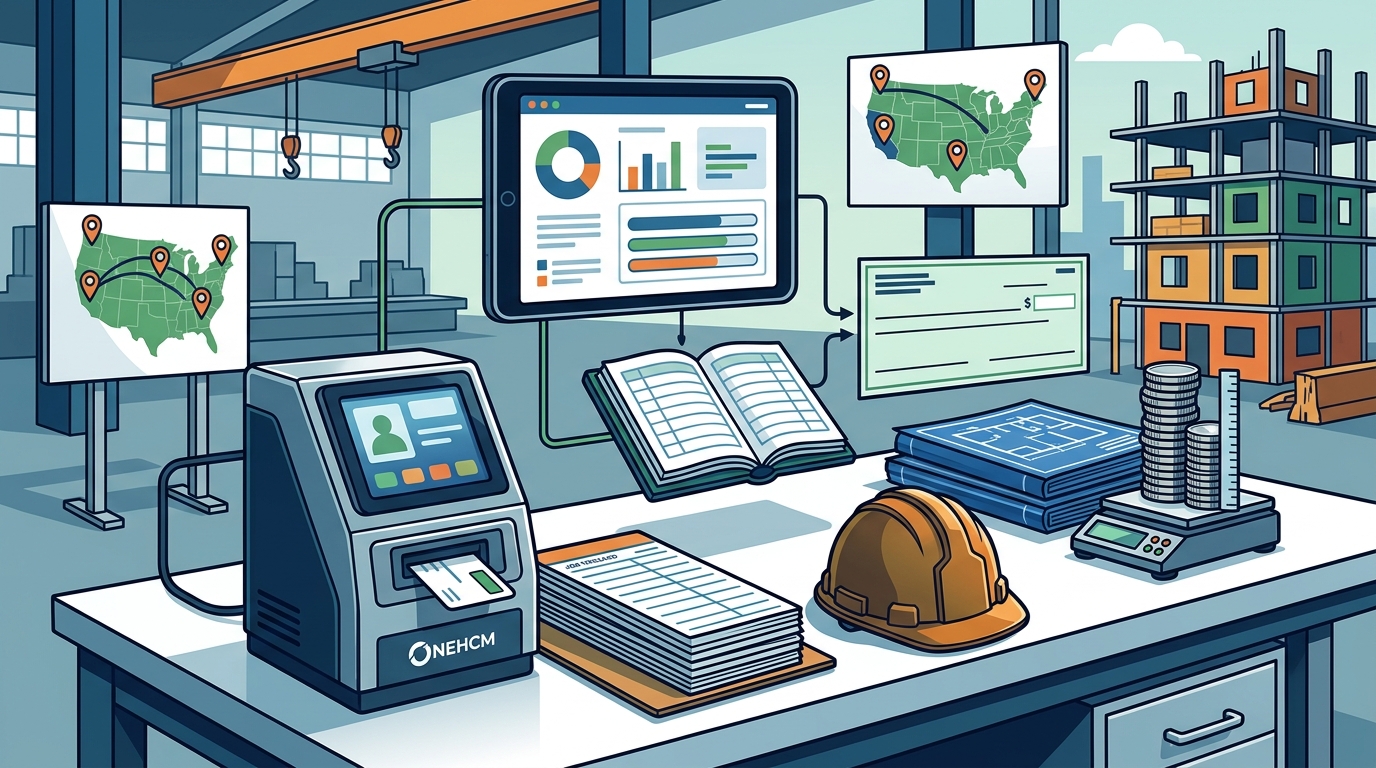
Unified Employee Records
ONEHCM’s One Employee Record ensures that every worker’s classification, wage rate, and benefit information is accurate and up-to-date. This single source of truth reduces the risk of discrepancies between timekeeping and payroll data.
Automated Certified Payroll Reporting
The platform automates the generation of certified payroll reports, ensuring they meet the specific requirements of each jurisdiction. This automation saves time and reduces the manual effort required to compile and verify data.
Real-Time Compliance Monitoring
With real-time data analytics, ONEHCM allows compliance officers to monitor wage rates and hours worked against prevailing wage determinations in real-time. This proactive approach helps identify and resolve potential compliance issues before they become violations.
For more information on how ONEHCM can support your compliance efforts, visit our Time & Labor Solutions page. You can also explore our Payroll capabilities to see how seamless data sharing enhances accuracy.
Key Takeaways
- Prevailing wage laws mandate region-specific pay rates for government-funded projects.
- California requires weekly certified payroll reports with detailed worker classifications.
- Multi-state compliance involves navigating varying job classifications and reporting deadlines.
- ONEHCM’s unified platform automates certified payroll reporting to reduce errors.
- Real-time monitoring helps identify compliance issues before they escalate.
- Accurate timekeeping is the foundation of compliant payroll processing.
- Consulting with compliance experts can help navigate complex regulatory landscapes.
Frequently Asked Questions
What is prevailing wage?
Prevailing wage is the standard hourly wage and usual benefits paid in the area to the majority of workers, employers, and laborers in a particular trade or occupation.
How often must certified payroll be submitted in California?
In California, certified payroll reports must be submitted weekly for all public works projects.
What happens if I fail to comply with prevailing wage laws?
Non-compliance can result in financial penalties, debarment from future contracts, and legal action.
Does ONEHCM support multi-state payroll?
Yes, ONEHCM is designed to handle multi-state payroll requirements, including varying wage rates and reporting formats.
How does ONEHCM ensure data accuracy?
ONEHCM uses a One Employee Record system to ensure that all worker data is consistent and accurate across HR, timekeeping, and payroll modules.
Can ONEHCM integrate with existing job boards?
Yes, ONEHCM offers integrations with major job boards to streamline recruitment and onboarding processes.
What is the Davis-Bacon Act?
The Davis-Bacon Act is a federal law that requires contractors and subcontractors on federally funded or assisted construction projects to pay their workers no less than the prevailing local wages.
Streamline Your Compliance Today
Don’t let complex wage regulations slow down your business. Contact ONEHCM to request a demo and discover how our Human Connection Management platform can simplify your compliance workflow.