

Piece-rate compensation remains a critical operational model for California employers in manufacturing, agriculture, and logistics. However, the regulatory landscape has shifted dramatically. According to recent labor compliance reports, over 60% of employers face significant audit risks when managing piece-rate wages without automated tracking systems. This complexity stems from California's unique requirement to pay non-productive time at a separate, calculated rate. Without specialized software, manual calculations often result in underpayment violations that trigger costly penalties. ONEHCM addresses this challenge by unifying time tracking, payroll processing, and compliance reporting into a single cloud-based platform designed for high-volume, variable-pay environments. (Contact Us OnePoint HCM)
Understanding California Piece-Rate Pay Laws
Piece-rate pay is a compensation method where employees earn a fixed rate for each unit produced or task completed. In California, this model is governed by strict wage and hour laws that protect workers from wage theft. The core principle is that piece-rate earnings must be calculated based on the actual time spent producing those units. This means the employer must track exactly how many hours an employee spends on production tasks versus other duties. (ONEHCM Human Connection Management)
California Labor Code Section 226.4 defines piecework compensation and mandates that employers provide accurate, itemized wage statements. These statements must clearly separate piece-rate earnings from other types of pay. If an employer fails to track time accurately, the law presumes that all hours worked were spent on piece-rate tasks. This presumption can lead to massive overpayments if the employee also performed administrative or non-productive duties. Therefore, precise time tracking is not just a best practice; it is a legal necessity.
For employers in industries like manufacturing or retail, managing these records manually is nearly impossible. Spreadsheets lack the real-time integration needed to calculate hourly equivalents accurately. This is where specialized Human Capital Management (HCM) software becomes essential. ONEHCM provides a unified employee record that captures every minute of work, ensuring that piece-rate calculations are both accurate and defensible during audits.
The Non-Productive Time Requirement
The most complex aspect of California piece-rate pay is the handling of non-productive time. Non-productive time includes any period where the employee is under the employer's control but not producing units. Examples include waiting for materials, attending mandatory meetings, cleaning equipment, or traveling between job sites. California law requires that this time be paid at a separate, non-piece-rate hourly wage.
To calculate this separate rate, employers must determine an "average hourly wage" for the piece-rate work. This is done by dividing the total piece-rate earnings by the total hours spent on piece-rate tasks. This average rate then becomes the baseline for paying non-productive time. If an employee earns $500 for 10 hours of production, their average hourly rate is $50. Any non-productive time must be paid at least $50 per hour, plus any applicable overtime premiums.
Manual calculation of these averages is prone to error. A single mistake in the denominator (total hours) can skew the entire payroll. ONEHCM automates this calculation by continuously monitoring time entries and piece-rate outputs. The system dynamically adjusts the average hourly rate in real-time, ensuring that non-productive time is always compensated at the correct legal minimum. This automation eliminates the risk of underpayment and protects the employer from liability.
Critical Software Features for Piece-Rate Compliance
Not all payroll software can handle piece-rate pay effectively. Many generic systems treat piece-rate as a simple bonus or commission, which is legally incorrect. To ensure compliance, your HR and payroll software must include specific capabilities designed for variable pay structures.
| Feature | Why It Matters for California Compliance | ONEHCM Capability |
|---|---|---|
| Time & Labor Tracking | Must distinguish between productive and non-productive hours. | Advanced Time Clocks with customizable categories. |
| Piece-Rate Engine | Automatically calculates earnings based on unit output. | Integrated Payroll Processing with piece-rate modules. |
| Average Hourly Rate Calc | Computes the correct rate for non-productive time. | Automated calculation within the Payroll engine. |
| Itemized Wage Statements | Must show piece-rate and hourly pay separately. | Customizable Payroll Reporting templates. |
| Overtime Integration | Must apply overtime to both piece-rate and hourly pay. | Real-time Scheduling and overtime alerts. |
When evaluating software, look for a system that integrates time tracking directly with payroll. Disconnected systems create data silos that lead to calculation errors. ONEHCM unifies these functions, ensuring that time data flows seamlessly into payroll calculations. This integration is critical for maintaining accuracy and reducing administrative burden.
How ONEHCM Handles Piece-Rate Pay
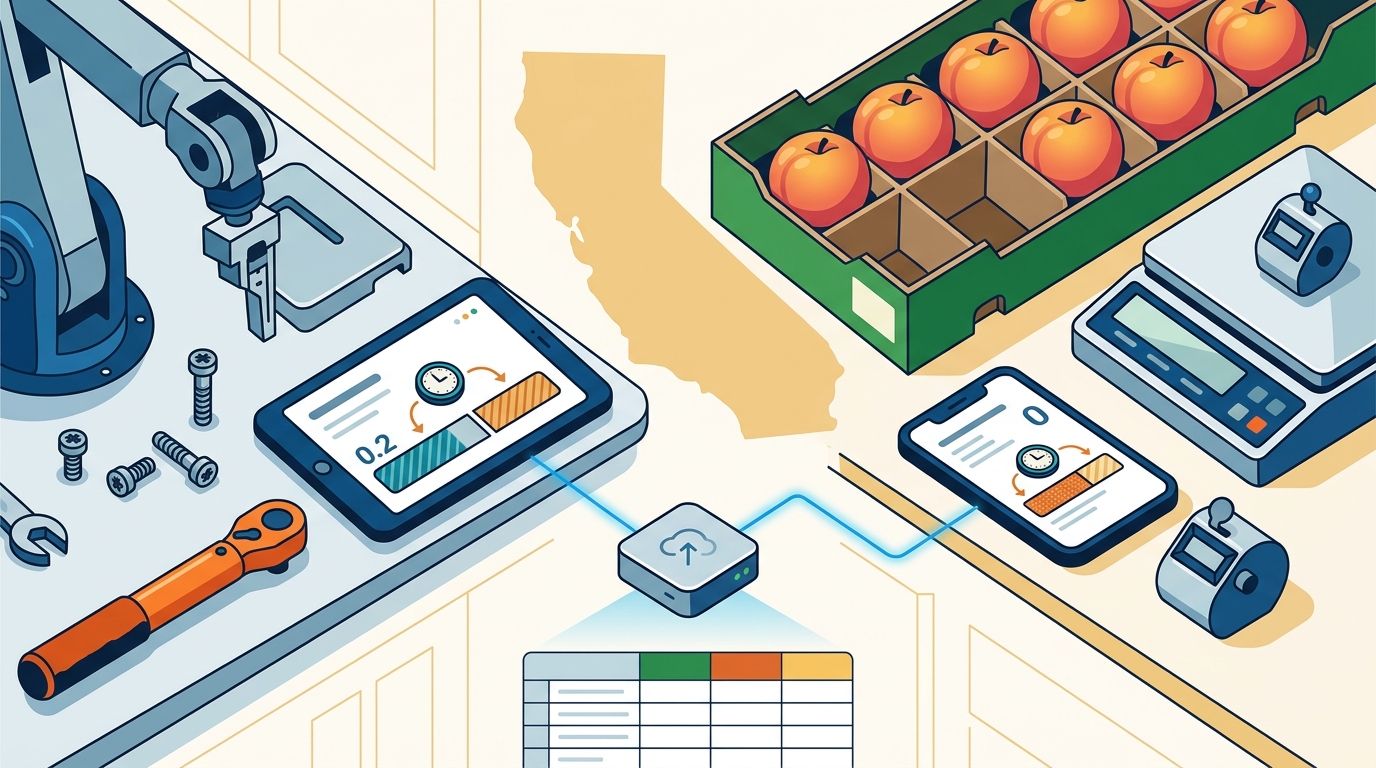
ONEHCM is designed to handle the complexities of piece-rate pay with precision and ease. The platform offers a dedicated Piece Rate Pay module that allows employers to set up multiple rate structures for different tasks or products. Employees can log their output directly through the mobile app or time clock, ensuring real-time accuracy.
The system automatically calculates the average hourly rate for each employee based on their daily or weekly production. This rate is then applied to any non-productive time logged during the pay period. For example, if an employee spends two hours in a training session, the system calculates the pay for those two hours using the average hourly rate derived from their piece-rate earnings. This ensures compliance with California's requirement to pay non-productive time at a separate rate.
Additionally, ONEHCM provides robust Time & Labor tools that help managers monitor productivity and labor costs in real-time. The Scheduling module allows for advance planning, helping employers balance workforce needs with production goals. By integrating these tools, ONEHCM helps employers optimize their operations while maintaining strict compliance with wage and hour laws.
Compliance and Audit Readiness
California labor laws are subject to frequent changes. Recent updates, such as the California Emergency Contact Law and updates to payroll tax compliance, highlight the importance of staying current with regulatory requirements. Employers who rely on manual processes or outdated software are at high risk of non-compliance.
ONEHCM keeps your organization ahead of regulatory changes by continuously updating its compliance features. The platform provides automated alerts for new laws and offers guidance on how to implement them. For piece-rate pay, this means staying updated on changes to minimum wage rates, overtime rules, and meal and rest break requirements. ONEHCM's Compliance resources and Blog provide expert insights to help you navigate these changes.
Furthermore, ONEHCM generates detailed audit trails for every transaction. If a labor audit occurs, you can quickly produce accurate records of time worked, piece-rate earnings, and non-productive time payments. This transparency builds trust with employees and regulators, demonstrating your commitment to fair and lawful compensation practices.
Key Takeaways
- California Law Requires Separate Rates: Non-productive time must be paid at a separate hourly rate calculated from piece-rate earnings.
- Average Hourly Rate is Critical: This rate is derived by dividing total piece-rate earnings by total piece-rate hours worked.
- Manual Tracking is Risky: Spreadsheets often lead to calculation errors and compliance violations.
- ONEHCM Automates Compliance: The platform handles complex calculations automatically, reducing administrative burden.
- Integrated Time & Payroll: Seamless data flow between time tracking and payroll ensures accuracy.
- Real-Time Monitoring: Managers can track productivity and labor costs in real-time using ONEHCM tools.
- Audit Readiness: Detailed records and automated updates help employers stay compliant with changing laws.
Frequently Asked Questions
What is piece-rate pay in California?
Piece-rate pay is a compensation method where employees earn a fixed rate for each unit produced. In California, this must be tracked separately from non-productive time to ensure compliance with wage laws.
How is non-productive time paid in California?
Non-productive time must be paid at a separate hourly rate. This rate is calculated by dividing the employee's total piece-rate earnings by the total hours spent on piece-rate tasks.
Does ONEHCM handle piece-rate pay automatically?
Yes, ONEHCM includes a dedicated Piece Rate Pay module that automates the calculation of average hourly rates and non-productive time payments.
What happens if I don't track piece-rate hours accurately?
If you fail to track hours accurately, California law presumes all hours were spent on piece-rate tasks. This can lead to massive overpayments and legal penalties.
Can ONEHCM integrate with other HR systems?
Yes, ONEHCM offers robust Integrations with popular HR and accounting platforms to ensure seamless data flow across your organization.
Is ONEHCM suitable for small businesses?
Yes, ONEHCM is designed to scale with your business. It offers flexible pricing and personalized support to meet the needs of small to mid-sized enterprises.
How does ONEHCM help with compliance?
ONEHCM provides automated updates, audit trails, and expert resources to help you stay compliant with California's complex labor laws.
What industries benefit most from ONEHCM's piece-rate features?
Industries such as manufacturing, agriculture, logistics, and retail benefit significantly from ONEHCM's piece-rate capabilities due to their high volume of variable pay.
Ready to Simplify Piece-Rate Pay?
Stop worrying about complex calculations and compliance risks. ONEHCM provides the tools you need to manage piece-rate pay accurately and efficiently. Our platform is designed to help you save time, reduce errors, and ensure your employees are paid correctly every time. Contact ONEHCM today to discover what Human Connection Management can mean for your organization. Request a Demo to see how ONEHCM can transform your HR and payroll processes.