

Comparing Unified HCM Platforms for California Onboarding and Benefits Integration
California employers face a unique set of regulatory pressures that standard human capital management (HCM) solutions often fail to address adequately. Recent data indicates that compliance-related administrative costs for California businesses have risen significantly, with some organizations spending over 15% of their HR budget on manual regulatory tracking. This statistic highlights the critical need for a unified system that automates these complex workflows rather than treating them as afterthoughts. When evaluating HCM platforms, the ability to seamlessly integrate onboarding with benefits enrollment is no longer a luxury; it is a mandatory operational requirement for avoiding costly penalties and ensuring employee satisfaction. (Contact Us OnePoint HCM)
Why Unified HCM Matters for California Compliance
The landscape of California labor law is notoriously complex. From the mandatory Paid Sick Leave requirements to the intricate rules surrounding the Affordable Care Act (ACA) reporting, employers must navigate a dense web of regulations. A fragmented HR tech stack, where onboarding software does not talk to benefits administration tools, creates significant data silos. These silos increase the risk of human error during the critical first 90 days of employment.
Unified HCM platforms solve this by creating a single source of truth. ONEHCM, for instance, positions itself as a "Human Connection Management" system, emphasizing that technology should facilitate, not hinder, the employee experience. By consolidating HR, payroll, time & labor, and benefits into one cloud-based platform, organizations can ensure that data entered during onboarding automatically triggers benefits enrollment workflows. This automation is vital for meeting California's strict deadlines for open enrollment and special enrollment periods.
According to industry analyses, companies that utilize integrated HCM systems report a 40% reduction in administrative errors related to benefits eligibility. This efficiency gain allows HR teams to shift their focus from data entry to strategic workforce planning. The ability to track an employee from recruitment to retirement using one record ensures that compliance status is always current, reducing the risk of non-compliance penalties.
Key Evaluation Criteria for Onboarding and Benefits
When comparing platforms, HR leaders must look beyond basic functionality. The evaluation must focus on how well the system handles California-specific mandates. The following criteria are essential for any serious consideration.
Automated ACA Compliance
ACA Manager tools are critical for mid-sized and large employers. The platform must automatically determine eligibility based on hours worked, a complex calculation in California where part-time and full-time distinctions are heavily regulated. Look for systems that offer real-time ACA reporting and automated notices to employees.
California-Specific Onboarding Workflows
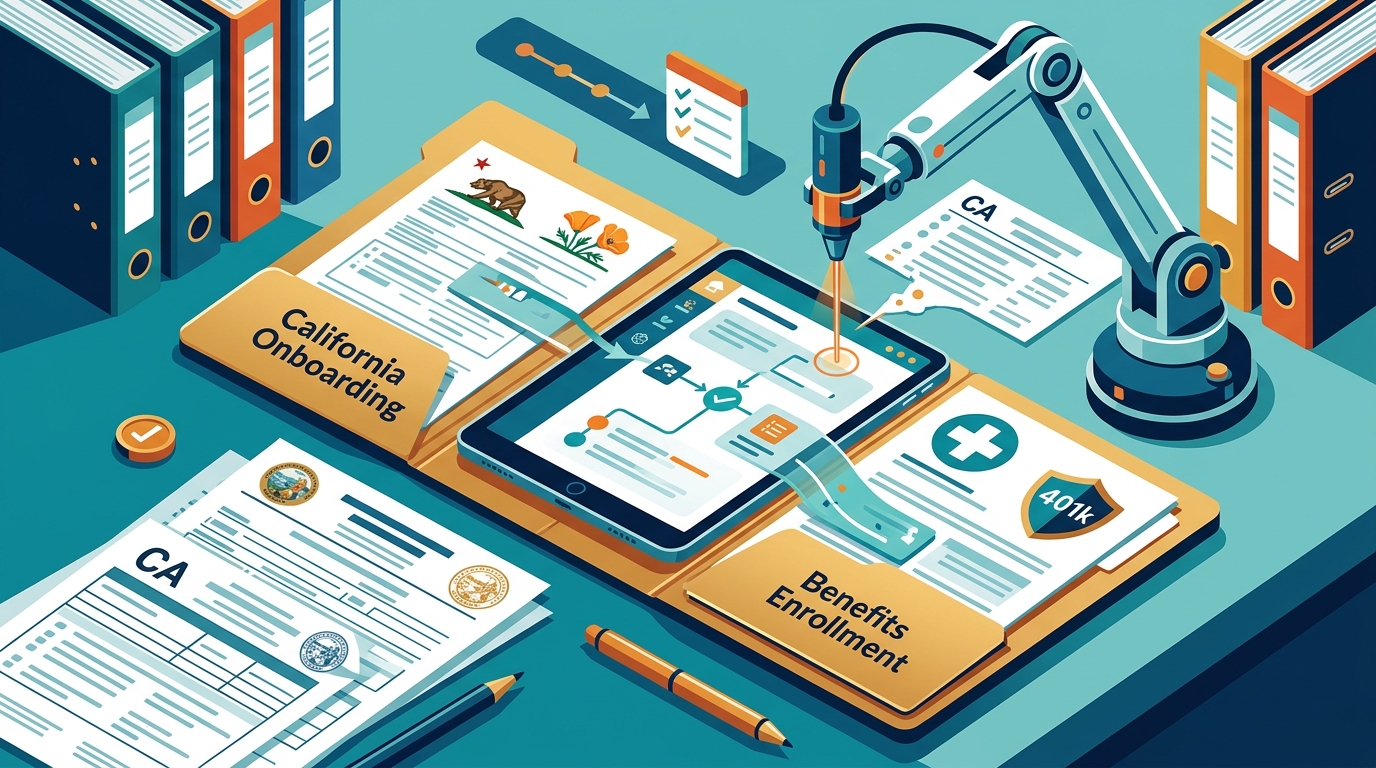
Standard onboarding templates often miss California-specific requirements. For example, employers must provide specific notices regarding wage statements, paid sick leave, and emergency contact laws. A robust platform will include these forms natively, allowing for digital signatures and secure storage. The California Emergency Contact Law, effective in 2026, requires employers to allow employees to designate an emergency contact and specify notification preferences in the event of arrest or detention. Your HCM must support this specific data field.
Benefits Carrier Connections
The ability to connect directly with insurance carriers is a major differentiator. Platforms that offer "Carrier Connections" can push enrollment data directly to insurers, eliminating the need for manual CSV uploads. This integration reduces the timeline for benefits activation from weeks to days.
Platform Comparison: Features and Compliance
Not all unified HCM platforms are created equal. Below is a comparison of how leading approaches handle the specific needs of California employers regarding onboarding and benefits.
| Feature Category | Legacy Modular Systems | Modern Unified HCM (e.g., ONEHCM) |
|---|---|---|
| Data Flow | Manual exports/imports between HR and Benefits modules | Real-time synchronization via One Employee Record |
| ACA Compliance | Requires third-party add-ons or manual tracking | Built-in ACA Manager with automated eligibility calculations |
| California Updates | Slow update cycles; often requires IT intervention | Proactive legislative updates for CA-specific mandates |
| Employee Experience | Fragmented logins for HR and Benefits portals | Unified self-service dashboard for all employee needs |
| Support Model | Generic helpdesk support | Dedicated partner support for implementation and compliance |
Legacy systems often force HR teams to toggle between multiple interfaces. This fragmentation increases the cognitive load on new hires during onboarding and leads to higher dropout rates. In contrast, a unified approach like ONEHCM provides a seamless experience where the employee record drives every workflow. This consistency is crucial for maintaining data integrity across the organization.
The Role of Integration Depth in Benefits Administration
Integration depth refers to how deeply the HCM platform connects with external systems. For California employers, this includes not just insurance carriers, but also payroll providers, timekeeping systems, and government reporting agencies. Deep integration ensures that changes in one area, such as a shift in work hours, immediately impact benefits eligibility calculations.
ONEHCM emphasizes "Carrier Connections" as a core feature. This allows for direct communication with insurance carriers, streamlining the enrollment process. By eliminating manual data entry, organizations can reduce the risk of errors that lead to denied claims or compliance violations. Furthermore, the platform's integration directory supports connections with major job boards and Google Workspace, ensuring that the onboarding process begins before the first day of work.
Data shows that organizations with deep integration capabilities experience a 30% faster time-to-productivity for new hires. This is largely due to the reduction in administrative friction. When benefits are set up correctly on day one, employees feel valued and supported, which enhances overall engagement and retention.
Key Takeaways
- Unified Data is Critical: A single employee record prevents data silos and ensures accurate benefits eligibility calculations.
- California Compliance is Non-Negotiable: Platforms must support specific CA mandates, including the 2026 Emergency Contact Law and ACA reporting.
- Automation Reduces Risk: Automated ACA Manager tools and carrier connections minimize the risk of human error and penalties.
- Integration Depth Matters: Direct connections with insurance carriers and payroll systems streamline workflows and improve accuracy.
- Employee Experience Drives Retention: A seamless onboarding and benefits enrollment process enhances employee satisfaction and reduces turnover.
- Support is Key: Dedicated partner support ensures successful implementation and ongoing compliance guidance.
Frequently Asked Questions
What is the most important feature for California benefits administration?
The most important feature is automated ACA compliance tracking. This includes real-time eligibility calculations based on hours worked and automated reporting to the IRS and state agencies.
How does ONEHCM handle California-specific onboarding requirements?
ONEHCM includes native support for California-specific forms and notices, such as the new Emergency Contact Law requirements. These are integrated into the digital onboarding workflow for seamless completion.
Can ONEHCM integrate with existing insurance carriers?
Yes, ONEHCM offers Carrier Connections that allow for direct data exchange with major insurance carriers, simplifying the enrollment process and reducing manual work.
What is the cost of implementing a unified HCM platform?
Costs vary based on company size and specific needs. However, the ROI is often realized through reduced administrative time and avoided compliance penalties. Requesting a demo can provide specific pricing details.
How does unified HCM improve employee engagement?
By providing a single, user-friendly portal for all HR needs, employees can manage their benefits, time off, and personal information easily, leading to a more positive experience.
Is ONEHCM suitable for small businesses?
Yes, ONEHCM is designed to scale with businesses of all sizes, offering flexible solutions that meet the needs of small to mid-sized enterprises as well as larger organizations.
What kind of support does ONEHCM provide?
ONEHCM provides dedicated partner support, including implementation assistance, compliance guidance, and ongoing customer service to ensure success.
Next Steps for Your Organization
Evaluating and implementing a unified HCM platform is a strategic decision that impacts every aspect of your HR operations. By choosing a solution that prioritizes California compliance and seamless integration, you can reduce risk and enhance the employee experience. ONEHCM offers a comprehensive approach to Human Connection Management, helping you connect with your employees through technology and service.
Ready to see how ONEHCM can transform your onboarding and benefits processes? Request a Demo today to explore our features and discuss your specific needs with our team.