

Common Pitfalls in Unified HCM Implementation and How to Sidestep Them
Implementing a unified Human Capital Management (HCM) system is a transformative milestone for any organization. However, the path to a successful deployment is rarely linear. According to recent industry analyses, over 70 percent of digital transformations fail to meet their original objectives due to poor change management and fragmented data strategies. This statistic highlights a critical reality: technology alone does not drive success. The human element, process alignment, and strategic planning are equally vital. Organizations that ignore these nuances often face budget overruns, low user adoption, and operational disruption. This guide explores the most common pitfalls in unified HCM implementation and provides actionable strategies to avoid them, ensuring your investment delivers measurable impact.
Pitfall 1: Neglecting Data Integrity and Migration
One of the most critical failures in HCM implementation is poor data hygiene. Many organizations attempt to migrate legacy data without thorough cleansing. This results in a "garbage in, garbage out" scenario where the new system inherits historical errors, duplicates, and inconsistencies.
The Cost of Dirty Data
When employee records are fragmented across multiple legacy systems, consolidating them into a single source of truth becomes challenging. Data quality issues can reduce revenue by up to 15 percent annually due to inefficiencies and incorrect reporting. For example, inaccurate payroll data can lead to compliance penalties and employee dissatisfaction.
Sidestepping the Pitfall
To avoid this, conduct a comprehensive data audit before migration. Define clear data governance policies and assign ownership for data quality. Use automated tools to identify duplicates and missing fields. ONEHCM emphasizes the importance of a One Employee Record to ensure that all HR, payroll, and benefits data is unified and accurate from day one.
Pitfall 2: Underestimating Change Management
Technology adoption is only as successful as the people using it. A common pitfall is treating implementation as a purely technical project rather than a cultural shift. Employees may resist new systems due to fear of the unknown or lack of training.
The Human Connection Gap
Without proper communication, users may revert to old habits, such as using spreadsheets for time tracking. This undermines the entire purpose of the unified system. Research shows that projects with excellent change management are six times more likely to meet objectives. The key is to engage stakeholders early and consistently.
Sidestepping the Pitfall
Develop a robust change management plan that includes training, communication, and feedback loops. Highlight the benefits of the new system for employees, such as self-service capabilities and streamlined processes. ONEHCM’s approach to Human Connection Management focuses on helping organizations connect with employees through technology and service, ensuring that the human element is prioritized.
Pitfall 3: Ignoring Integration Complexity
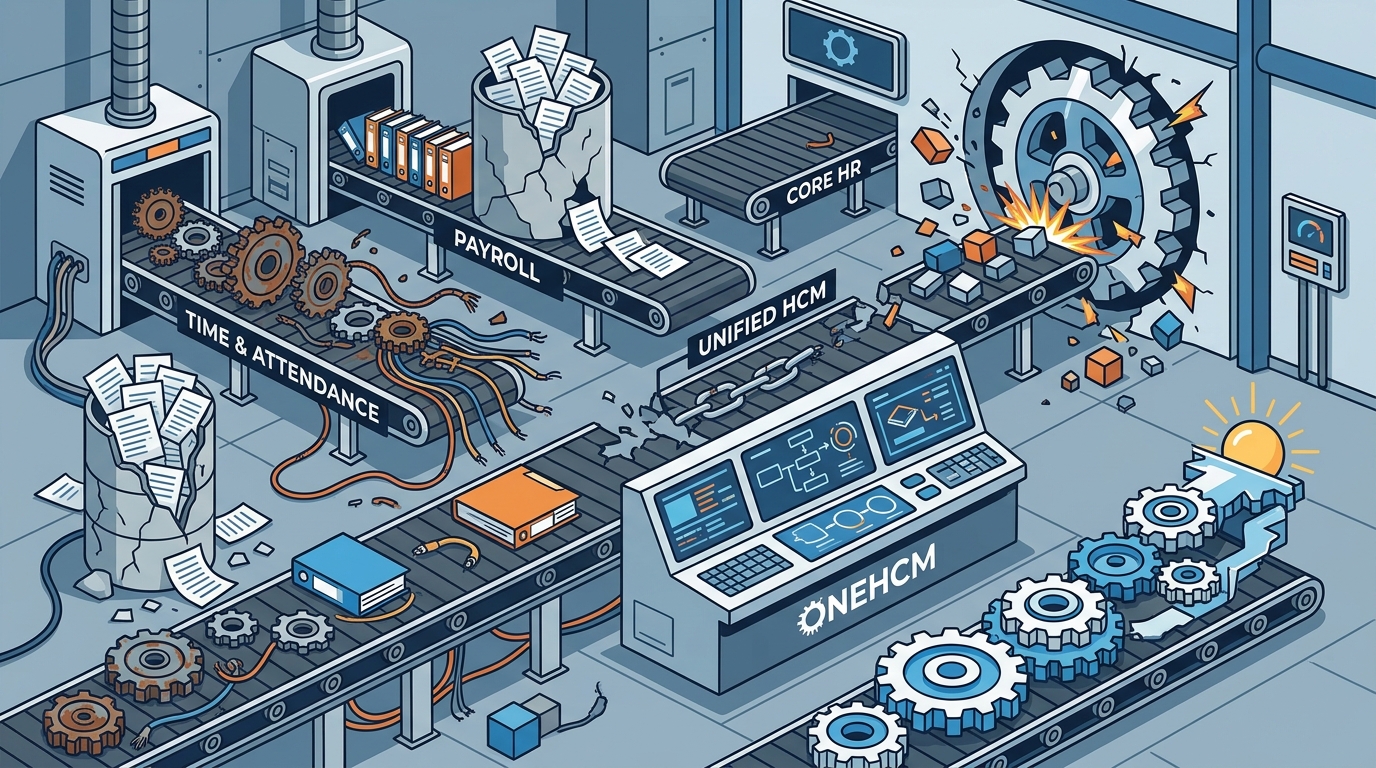
Modern businesses rely on a stack of software tools. A unified HCM system must integrate seamlessly with existing applications, such as accounting software, job boards, and communication platforms. Failing to plan for these integrations can create data silos and operational bottlenecks.
The Silo Effect
If the HCM system does not talk to other critical tools, HR teams may end up manually transferring data between systems. This increases the risk of errors and reduces efficiency. McKinsey reports that digital integration can improve operational efficiency by up to 20 percent.
Sidestepping the Pitfall
Map out all necessary integrations during the planning phase. Choose an HCM platform with a robust Integration Directory that supports popular tools like Google Workspace and various job boards. Ensure that APIs are well-documented and that technical teams are involved in the selection process.
Pitfall 4: Over-Customization vs. Standardization
While customization can make a system feel tailored to your business, over-customization can lead to upgrade difficulties and higher maintenance costs. Many organizations fall into the trap of trying to force the new HCM system to mimic their legacy processes exactly.
The Upgrade Trap
Heavily customized systems are often incompatible with future updates from the vendor. This can leave the organization stuck on an outdated version or facing expensive custom development for every new release. Low-code and no-code platforms are reducing the need for heavy customization by allowing users to configure workflows without code.
Sidestepping the Pitfall
Adopt a "standard first" approach. Configure the system to match industry best practices before considering customization. ONEHCM offers a seamless payroll solution that is designed to work out-of-the-box, minimizing the need for complex modifications while still meeting specific business needs.
Pitfall 5: Overlooking Compliance and Security
HR data is sensitive and heavily regulated. Implementing a new HCM system without addressing compliance requirements can expose the organization to legal risks and data breaches. This includes regulations like GDPR, HIPAA, and local labor laws.
The Compliance Risk
Failure to comply with data protection laws can result in significant fines and reputational damage. The average cost of a data breach is over $4 million, making security a top priority. Additionally, labor law compliance, such as wage and hour regulations, must be built into the system’s logic.
Sidestepping the Pitfall
Work closely with legal and compliance teams during the implementation. Ensure that the HCM platform has built-in compliance features for reporting and audit trails. ONEHCM provides compliance tools that help organizations stay up-to-date with changing regulations, reducing the risk of penalties.
Key Takeaways
- Data Hygiene is Critical: Clean, accurate data is the foundation of a successful HCM implementation. Use ONEHCM’s One Employee Record to maintain integrity.
- Change Management Drives Adoption: Engage employees early and focus on the human connection to ensure smooth transition.
- Integration is Non-Negotiable: Plan for seamless connectivity with existing tools using a robust Integration Directory.
- Standardize Before Customizing: Avoid over-customization to ensure easier upgrades and lower maintenance costs.
- Compliance Must Be Built-In: Leverage automated compliance features to mitigate legal and security risks.
- Unified Systems Save Time: Consolidating HR, payroll, and benefits into one platform reduces errors and improves efficiency.
- Vendor Partnership Matters: Choose a provider like ONEHCM that offers dedicated support and a commitment to service excellence.
Frequently Asked Questions
What is the most common reason for HCM implementation failure?
The most common reason is poor change management and lack of user adoption. When employees are not trained or engaged, they resist using the new system, leading to data silos and inefficiencies.
How does ONEHCM ensure data integrity during migration?
ONEHCM emphasizes the importance of a One Employee Record and provides tools for data cleansing and validation before and during the migration process to ensure accuracy.
Can ONEHCM integrate with my existing job boards?
Yes, ONEHCM offers a comprehensive Integration Directory that includes connections to major job boards, Google Workspace, and other essential HR tools.
What is Human Connection Management?
Human Connection Management is ONEHCM’s philosophy that combines technology with personalized service to help organizations build stronger relationships with their employees, focusing on communication and engagement.
How does ONEHCM handle compliance updates?
ONEHCM provides automated compliance updates for payroll, benefits, and labor laws, ensuring that organizations remain compliant without manual intervention.
Is ONEHCM suitable for small businesses?
Yes, ONEHCM is designed to scale with businesses of all sizes, offering flexible solutions for non-profits, healthcare, and other industries.
What support does ONEHCM offer during implementation?
ONEHCM provides dedicated partner support, including onboarding assistance, training, and ongoing technical support to ensure a smooth transition.
Next Steps
Avoiding these common pitfalls requires careful planning, strategic partnership, and a focus on the human element. ONEHCM is designed to help you sidestep these challenges with a unified, compliant, and user-friendly platform. Request a Demo today to see how ONEHCM can transform your HR processes and drive measurable impact for your organization.